Q1. In what ways does your media product use forms & conventions of real media products?
Before we started to plan our film, we analysed trailers to ensure that we met the correct conventions of post-modernism films, my partner and I analysed 30 trailers between us, which was a range of postmodernism hybrids, varying from post-modernism romance for example the notebook, and action adventure postmodernism like The Matrix. Throughout this intensive research, we finally developed our genre for 'Siblings' which is post-modernism action adventure, through analysis we could create a unique trailer that met the conventions that successful similar trailers have used. When I analysed I noticed that different transitions are used to represent and respond to the different paces within the trailer, an example of this is in the hyper reality post-modernism film, Avatar, of which when the audience is being introduced to the new planet, fades and dissolves are used for the slow pace of the shots. Then, cuts are used for the rapid pace of the trailer when the action begins and the excitement builds for audience, so quick cuts are used. Normally, fades are used at the start of trailer when the audience is being introduced to the film, and then cuts are used later on in the trailer when the tension begins to hook the audience. Likewise, at the start of our trailer we have used a similar method to represent the tones, and cuts are used when the characters enter a new world. Below are the links to my Post - Modernism Trailer Analysis, where I have analysed 15 different films of a similar genre to my own.
1 - 5
6 - 10
11 - 15
Mise En Scene
We used conventional costumes and props, from thorough research to find out what audiences recognise characters to be like, and what their representation is from the way that they dress and appear on screen. We used these representations, however subverted them to make our characters seem unique and have signifiers that people will link them to. We did multiple surveys to find out what audiences prefer and we asked them questions like what they would expect to see in a postmodernism film and what is typical and what is not, this allowed us to get a range of feedback so that we could work out what sort of costumes, locations etc that we should use when we film our trailer. Here is the link for the feedback from the Mise En Scene survey.
We specifically chose to base our clothing on the film 'The Matrix' where all the characters are shown to be wearing black leather clothing, and so we have used this so that our main character, Lucy, wears a black leather jacket. However her brother Sam is shown to be wearing casual clothing making him seem less prepared for battle or weaker. This is because all the characters in the film have a strong representation which is what we want all our characters to have, even the antagonist and we want them to seem strong audiences so it is more of a challenge for the protagonists to defeat them.


Costumes
Props
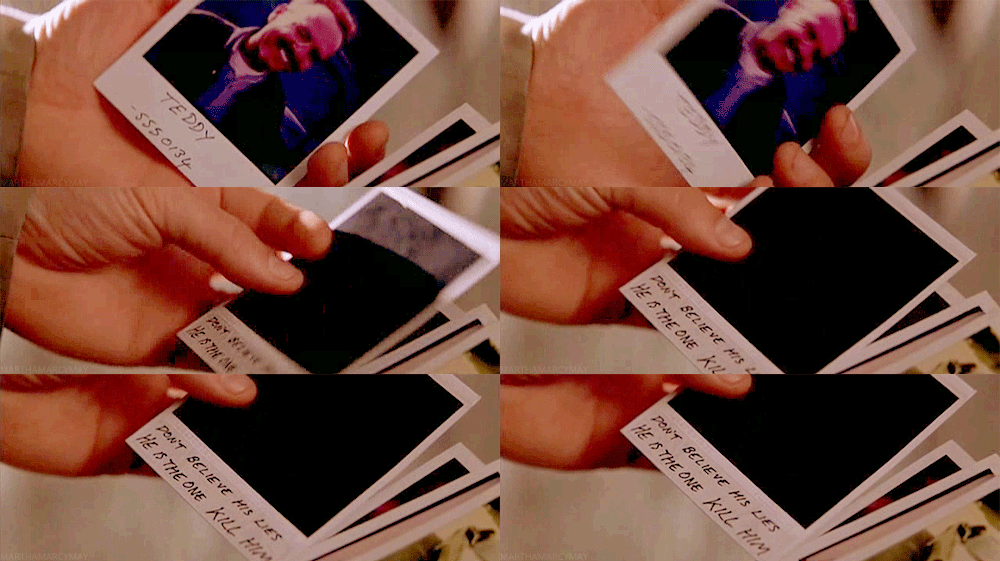
Another example, is that our main prop use in our trailer, is the locket that is shown to be hanging around her neck, that contains a photo of her Nan and her younger self. Typically people have a locket to remember someone by or so that they can still feel that the person is with them. Likewise, in the film 'Memento' he carries around Polaroid photos to remember who people are and what they are like due to his amnesia.
Another use of props that we have used in our trailer is the use of technology. As nowadays in postmodernism films, some sort of technological device will be used, this is due to the typical connotations of postmodernism films as they tend to be highly advanced in technology. However, we do not have access to this sort of technology and so we have had to keep it basic. We have used CCTV to allude the idea that someone is watching, where as if we had the correct technology and editing skills we could have created a robotic bug or drone that would follow the characters around so that the person watching/following them has constant tabs on them. An example of this is in SpyKids, where R.A.L.P.H a Robotic Arachnid Lithium Photo Helper, which gains information for spies, as it follows the characters around. Another technological prop that we have used is mobile phones, as she is shown to have one camping when she uses it as a torch in the dark.

Location
We surveyed our audience to find out exactly what sort of locations that you would expect to see in a post-modernism action adventure. Due to the different narrative and themes of films, it was hard to base our film on just one film and its locations. An example of this is Narnia which has the same idea of travelling to alternate world and trying to find there way home, however our trailer does not focus on a magical and fantasy aspect. We had to carefully decide what locations to use to achieve the right tone and connotations that can be inferred from each scene. We decided to film in our local area, because we understood the area better and could achieve better shot types with the appropriate background. We also decided on our local area because when she is transported to an alternate world, where she awakes at her Nan's house, of which is not in a big city or anywhere significant just a small town. She then explores the surrounding area to find her sibling


Our main location is the Nan's house as this is where she has all her memories of where she spent quality time with her Nan, and she then awakes in the new world here. It can be considered her safe location, as she feels comfortable and protected, despite the fact if trouble was to occur, her Nan would not be able to defend her due to her age. To achieve the right type of house for the Nan we asked our audience what they would expect to see if they went to an elderly home. Whether they would expect a modern, stylish home or a house filled with antiques and floral patterns.


From my research I found the locations that worked best for successful films and what sort of shots were used to present these locations. Once I figured out what locations I would used I then looked into other postmodernism films to find out how they presented these locations against the action.
Lighting
Throughout my trailer we used a variety of different lighting to represent the different scenes and that each one has a different shot alluding the idea of alternative moods. I closely analysed and documented the lighting and found that there was a range of ambient, high and low key lighting. For example, in 'Avatar' ambient lighting is used during the day when we are being introduced to the new location, later on in the trailer, low key lighting is used when we are taken into the forest of the tribe, of which we can see the unusual glowing plants and the different nature of the planet. the low key lighting that has been used creates a mystical yet unusual tone of the film.

Here you can see the glowing plants at night behind them. This is a screenshot from the original trailer, therefore they have decided to show the unique plantation to the audience before the initial release of the film.
When we created our trailer, we used ambient lighting while she explores the new world, this makes it easier for the audience to see the differences from the world that we live in and the world that Lucy has been transported to. This forms a positive representation of the world and it is light and nothing is hidden. However, when the audience is taken to the antagonist and they are watching the CCTV footage, they are surrounded by darkness, and so low-key lighting has been used to create the negative representation of these characters.

Here is our lighting research
Editing


To create a realistic post - modernism film we have used Adobe After Effects and Adobe Premier Pro. This allowed us to create a more advanced meaning in our trailer and it meant that audiences could understand the trailer better as the edited scenes meant that the story line of was presented in a clearer way. Professional movies like Avatar and Narnia will use more advanced editing equipment including green screens and specific cameras alongside technicians who will use more complex software to edit and make unique creative scenes.
We researched titles and credits to understand how they were presented, for example what order in the trailer they were shown and what sort of font and style they were presented in, For example did the font of the credit match the font of the title of the film. We also researched if there was a particular order of the actors/actresses and the people that contributed to make the film for example the director and producer where presented on screen of the trailer.
Here are the links to m prezi's of which i have researched titles and their designs, what is included in the titles, general editing that trailers have and transitions that trailers also have.
Sound
We also researched and carefully considered the choice of sounds and music to use to create our soundtrack, this allowed us to form an effective soundtrack that would represent the different tones and moods throughout our trailer. By researching the different trailer it allowed us to understand what worked well and what instruments and tones of music are used are certain specific points during the trailer.
Here is our research for sound
Narrative
Through research into various narratives, we found that films tend to follow a certain order of events that others have followed, however the context is different. We used sections of Joseph Campbell's theory so that we ensured our trailer met these conventions, however, we could not use all of them as the film would tend to feature all of the conventions as every scene would be shown. One of the stages that we have used is the ordinary world stage, of which is the ordered world in which the hero will choose or be forced to abandon, this has been used when Lucy is taken during the thunder storm in the night from the real world that we know to an alternate world where the story takes places. We later then have used the call to adventure stage when Lucy figures out what she has to do even though she has no choice as she wants to get home, similarly the meeting with the mentor stage happens here. This takes place when she wakes up in the alternate world, with her Nan who passed away in the real world, the mentor, aka, her Nan is the key character because without her Lucy would be clueless of where to start to solve her problem.
Another theorist that our trailer scenes follow is Roland Barthes hermeneutic and proairetic code. Due to the fact that our final product is a trailer, a purpose of a trailer is to engage audiences and persuading them to come a buy cinema tickets to see our film and so we have to keep things a secret or certain aspects hidden to ensure that we have cliff hangers and unanswered questions so that if the audiences is engaged they will want to see the film to find out the answers. The hermeneitic code is used by the equivocation by the partial or incomplete truth, an example of this in our trailer is that she doesn't know how she arrived in the alternate world or how to get home. Snares is also used when we have deliberately avoiding telling the audience about the government and what their purpose is and why they are so desperate to find Lucy and Sam. Additionally the proairetic code is also used to build tension in our trailer to make our audience excited to see the film, this will also refer to any action or important event that indicates something else is going to happen, and so the audience starts to guess what will happen next and how it will end. An example of this in our trailer is when the audience is seeing the film through a CCTV camera lens and they can start to realise that someone is watching these characters and are keeping tabs on the siblings, the audience is then taken to two people in a dark room whose identities are hidden, this builds the tension as the audience are now shown that they is darkness and evil in this alternate world.
Genre
We researched various films, that we of a similar genre to our own, this included; Narnia and The Matrix. We researched the conventions that it used so that we could apply these to our own. For example how the presented the post-modernism theme to their film, for example in Narnia they have used a different location by setting it in a magical winter wonderland. And so through intensive research we have applied theses genre techniques to our own.
Through the research of editing, sound, lighting, mise en scene and narrative we found various conventions that we could use and apply to our own context,